

Kim Ardelle
On Saturday, Sept. 12, 2026, the planetarium opened its doors to the public. Families, students, adults and children filed into the Community College of Baltimore County (CCBC) Planetarium for The Only One Planetarium event.
Located in the Math and Science Hall at CCBC's Catonsville campus, the planetarium was a brightly lit room where a dry-erase board, sign-in sheet, and domed ceiling awaited.
The lights faded to darkness, and the ceiling transformed into a night sky, full of galaxies, stars and planets. Each chair was positioned so guests could lean back and look directly at the dome. The darkened room created a relaxing atmosphere, making the presentation feel as immersive as it was educational. All eyes looked upward while learning about the Earth beneath their feet. Even as the presentation ended, the enveloping effect continued as the credits appeared to roll upward into the expanse of outer space.
The Only One Planetarium show is a recurring community program that uses immersive visuals to make astronomy approachable not only to children, but to students, adults and anyone interested. This semester, each show begins with a selected children's book, which is incorporated into the presentation by program presenter Stephanie Caravello-Hibbert.
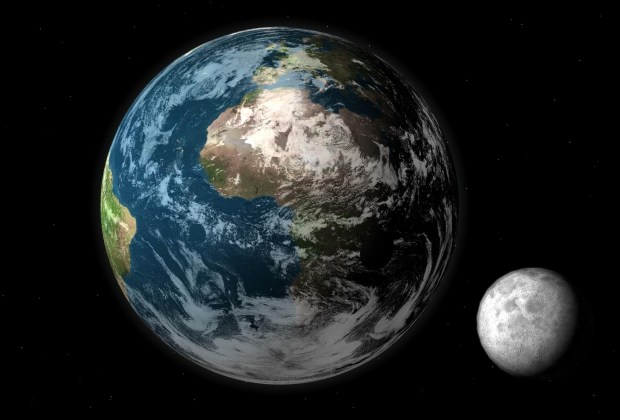
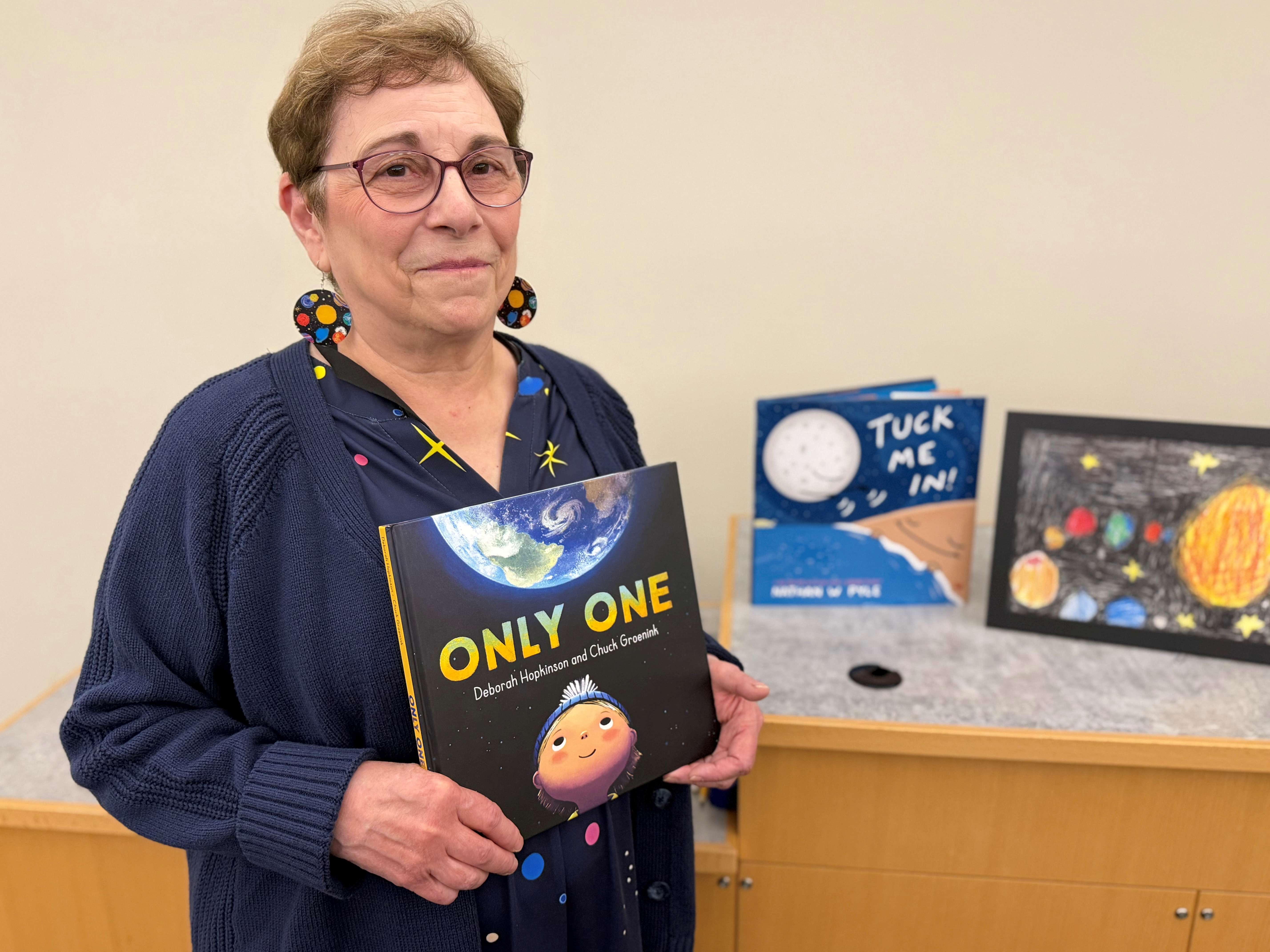
In the quiet room, Caravello-Hibbert's voice started the show with a narration of the children's book "Only One," by Deborah Hopkinson and Chuck Groenink, as illustrations and astronomical images stretched across the dome above. In the darkened planetarium, with the solar system floating overhead, the simplicity of a children's story blended with the vastness of outer space. The presentation then transitioned from the children's book into the documentary "Birth of Planet Earth," shifting from the simplicity of the story to the scientific history of Earth's formation.
Caravello-Hibbert's love of teaching has kept her at CCBC for more than 50 years. "I retired officially in 2004, but I kept teaching part-time. But now all I do is planetarium stuff ... I've been here since 1973." She went on to explain her roles at the college over the years and the passion she has had for teaching at CCBC.
"I still love doing this," she said. "This is the best part of teaching for me ... I get to be as creative as I want." She went on to credit her husband as the inspiration for incorporating children's books into the shows. He would bring home children's books on astronomy from his work at Howard County Library, which gave her the idea to use the planetarium to help illustrate what the books were trying to explain.
This approach makes the material accessible to attendees of all ages and levels of knowledge about astronomy.
It was Taylor's first time visiting a planetarium, and she explained how much she enjoyed the experience.
"I love stars," she said. "The whole experience was so cool. I've never been inside of a planetarium before, so just looking up and seeing all the planets ... that part was so cool for me." As for the show's straightforward, uncomplicated presentation, she said, "I like the simplification as well."
The overall experience offered something different depending on the person. The audience reflected that range, with parents and children sharing the room alongside adults who had attended on their own.
A first planetarium visit for Taylor, a new perspective on Earth's existence for Andrew, who attended the show with Taylor. Andrew shared that he is currently a student at CCBC and attended because of a flyer he saw for the event. Knowing how much Taylor liked stars, he thought it was a good opportunity for both of them to attend, so he invited her.
"I thought it was a lot of fun. It's nice to see the bigger picture of things again because you don't get to see that very often in your day-to-day," he said. "There were a million chances for this [Earth] to not be here, period."
When asked if there was anything specific about the show that stood out to him, Andrew shared his thoughts: "The perspective of early Earth and seeing how many ways we could have ended up as another destroyed rock in the process," he said. "And also chances for Earth to be bigger too, which would have been even more interesting."
Both Andrew and Taylor agreed that they liked the introductory storytelling. Andrew shared his perspective: "I think it was nice because it didn't lean too far into the [technical] terminology ... it was a nice introductory method," he said, noting that this approach allowed the material to be easily expanded upon while still keeping the content accessible for everybody. He particularly liked that, although a storybook and simple introduction were used, they weren't presented in a way that spoke down to the audience or was disrespectful to the adults who attended the event. They both agreed they would return for future shows.
At the end of the presentation, several individuals approached Caravello-Hibbert to thank her for the show and continue conversations about astronomy and the presentation. She explained that there would be four presentations this semester and shared details about some of the upcoming shows and books.
"The next one is called Tuck Me In, which explains tides in an interesting way. And then there's Catching the Light, which is about Wilhelmina Fleming." Caravello-Hibbert noted that Fleming is one of many women astronomers who did not receive deserved recognition. The final presentation will focus on Carl Sagan and his contributions to astronomy.
For Caravello-Hibbert, the value of the program extends beyond astronomy. When asked about the importance of CCBC offering free educational events like this one, she mentioned the many things people already have to pay for: "This is something that they can come to, opens up eyes, it's entertaining, and they don't have to pay for it. I mean, that's the biggest thing. And we're a community college. We should be serving the community. And that's what this does."


